

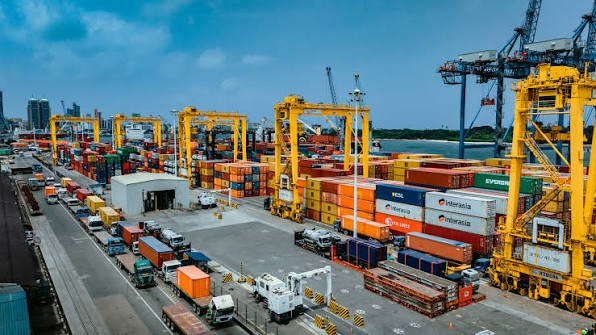
Dar es Salaam Port is handling ships faster while processing record cargo volumes, strengthening Tanzania’s role as an Indian Ocean gateway for trade extending into Central, Eastern and Southern Africa.
The port ranked 255th globally in the World Bank’s 2025 Container Port Performance Index, or CPPI, with a score of -7.75. Its standardised score stood at -176 in 2021, marking a substantial improvement in the time container vessels spend waiting and being handled during port calls.
CPPI measures how efficiently container ships move through ports, taking account of vessel size and the amount of cargo handled. It does not measure the full cost of moving goods through customs, roads, railways or borders, but provides a comparable measure of performance at the maritime gateway.
More recent operating figures point in the same direction. DP World reported in July 2026 that discharge time for comparable cargo at its Dar es Salaam operation had fallen by more than 90%, from over 300 hours to less than 28 hours since operations began in April 2024.
The improvement is taking place as considerably more cargo moves through the port. Tanzania Ports Authority said Dar es Salaam handled a record 33.7 million tonnes in the 2025/26 financial year, compared with 27.7 million tonnes a year earlier and 23.7 million tonnes in 2023/24.
That growth increasingly reflects Dar es Salaam’s regional role rather than Tanzania’s domestic market alone.
The Democratic Republic of Congo accounted for 5.995 million tonnes of cargo through the port in 2024/25, representing 47% of transit traffic handled for neighbouring countries. Zambia followed with 3.51 million tonnes, while Rwanda accounted for 1.72 million tonnes, Malawi 675,200 tonnes and Burundi 425,774 tonnes.
Those figures place Dar es Salaam at the maritime end of supply chains stretching from the Indian Ocean to the Great Lakes and the Central African Copperbelt. Copper, cobalt, agricultural commodities, machinery, fuel and manufactured goods move through corridors linking the port with some of Africa’s most important production and consumer markets.
The physical port has also changed. Work under the Dar es Salaam Maritime Gateway Project reconstructed and deepened berths, widened and deepened the entrance channel and expanded the turning basin, allowing larger vessels greater access to the harbour.
Private terminal investment has accompanied those public works. DP World and Tanzania East Africa Gateway Terminal Limited have invested in cargo-handling equipment, yards, information systems and other infrastructure intended to increase the amount of freight that can be processed through the port.
The operational gains are now being tested by the pace of growth.
TPA said during a recent marketing mission in Lubumbashi that cargo from the DRC increased 43%, from 4.1 million tonnes in 2023/24 to 5.9 million tonnes in 2024/25. The authority also said average handling time for container vessels had fallen to about three days.
The expansion has implications beyond the port itself. Landlocked African economies ultimately measure a trade corridor by the time and cost required to move cargo from the coast to factories, mines, farms and consumer markets hundreds or thousands of kilometres inland.
Tanzania is therefore investing beyond the waterfront, including in railways, dry ports and freight facilities designed to move rising cargo volumes away from Dar es Salaam and towards neighbouring markets.
The pressure will increasingly fall on those inland connections. Faster vessel turnaround can increase port capacity and improve shipping reliability, but gains at the quay can be reduced if cargo encounters delays on railways, roads or border crossings.
That makes Dar es Salaam’s latest performance part of a wider African infrastructure question. As countries invest in competing routes to the Indian and Atlantic oceans, the ports gaining regional cargo will be those able to connect improvements at sea with reliable movement inland.
Dar es Salaam’s recent numbers show progress on the maritime part of that equation. The next test is whether Tanzania can maintain shorter vessel times while carrying record volumes deeper into a regional market that increasingly extends from the Indian Ocean to the Copperbelt and the Great Lakes.
